
Bedinvetmab (Librela) for Dogs: Does the New Arthritis Injection Actually

Wondering about the sterile Librela injection for dogs? Dr. Waleed DVM reviews bedinvetmab—clinical results, side effects, and if it's worth the cost.
Your dog has been on meloxicam for months. Some days it helps. Other days you can still see them struggling to get up, reluctant to walk, not quite right. You went back to your vet and they mentioned something new — a monthly injection called Librela.
Or maybe you have been reading about it online and you want to know: does it actually work? Is it safe? Is it right for my dog?
As a veterinarian keeping up with the latest research, I want to give you the most honest and complete picture — what the clinical trials actually show, what the safety concerns are in plain English, and what questions to ask your vet before making this decision.
What Is Librela — and What Is Bedinvetmab?
They are the same thing. Librela is the brand name. Bedinvetmab is the scientific name for the drug inside it. In Australia it is called Beransa. Whatever name you have seen — it is the same monthly arthritis injection.
Librela was first approved in Europe in October 2020 and in the United States in May 2023. It is one of the newest tools vets have for managing arthritis pain in dogs — and it works in a completely different way from anything that came before it.
How Does Librela Work — In Plain English
To understand Librela, you first need to understand why arthritic joints hurt.
Inside a dog's arthritic joint, the body produces large amounts of a protein called nerve growth factor — think of it as a pain amplifier. The more of it there is, the louder and more constant the pain signal becomes. Traditional arthritis medications like meloxicam work by reducing the inflammation inside the joint — they target the fire, so to speak.
Librela does something different. Instead of targeting the fire, it targets the alarm. It is a specially engineered molecule — called a monoclonal antibody, which simply means a very precise, targeted protein designed in a laboratory to latch onto one specific target — that seeks out nerve growth factor in the body and neutralises it. With the pain amplifier switched off, the brain receives far fewer pain signals from the arthritic joint.
This is why Librela can help dogs who have not fully responded to meloxicam. It is not doing the same thing better — it is doing something completely different. Some dogs respond better to one approach, others to the other, and many benefit from both together.
How Is Librela Given?
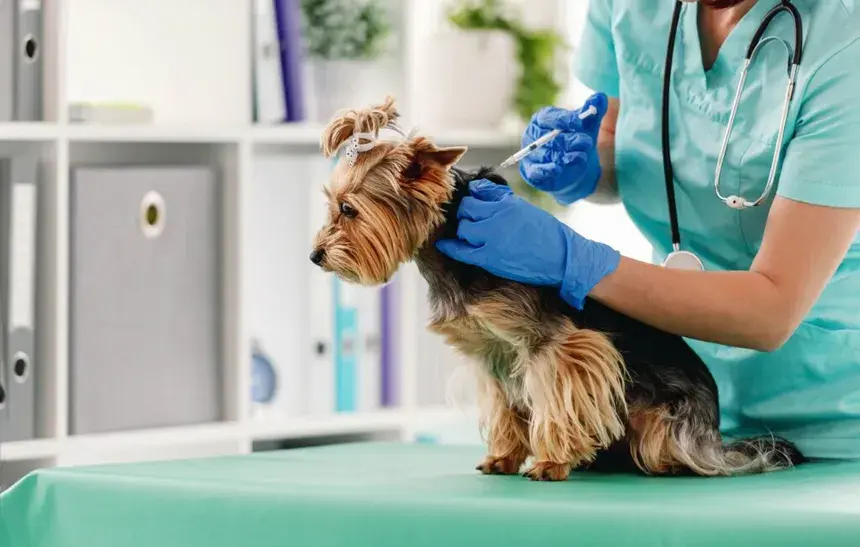
Librela is a small injection given under the skin by your vet — once every month. Most dogs barely notice it. It is quick, it does not require sedation, and it can usually be done during a routine appointment.
You do not administer it at home. Your dog comes in once a month, gets the injection, and goes home. That is the entire process from the owner's side.
This is one of its biggest practical advantages for many owners. Daily tablets require remembering every single day. Some dogs are very good at spitting tablets out or refusing to eat them hidden in food. A monthly injection at the vet removes all of that entirely.
What Happens If You Miss a Monthly Injection?
Librela builds up in the body gradually over the first few months. Missing a single injection will not cause sudden worsening, but the pain-relieving effect will gradually wear off over the following weeks as the drug level drops.
If you miss an appointment, rebook as soon as possible — ideally within a week or two of the missed date. Do not try to give a double dose at the next visit. Just resume the normal monthly schedule. Your vet will advise if any adjustment is needed based on how long the gap was.
Does Librela Work for All Types of Arthritis?
Librela is approved for osteoarthritis — the degenerative joint disease that develops as dogs age and their cartilage wears down. This is by far the most common form of arthritis in senior dogs.
It has been studied across multiple joints — hips, elbows, knees, and spine. Clinical trials included dogs with elbow osteoarthritis specifically, and the drug appears effective across different affected joints rather than being limited to one area.
It is not specifically studied or approved for immune-mediated arthritis — the rarer form caused by the immune system attacking the joints — so dogs with that diagnosis should have a specific conversation with their vet about whether Librela is appropriate.
Does Librela Actually Work?
The clinical evidence is genuinely encouraging.
Clinical trials showed 40% to 50% improvement in owner-assessed pain scores over three months — meaning owners reported significant improvement in how much their dog was struggling, how willing they were to move, and how comfortable they appeared.
A major 2025 study published in Frontiers in Veterinary Science directly compared Librela head-to-head with meloxicam — the current gold standard for arthritis pain in dogs. The result: the two treatments produced comparable levels of pain relief. Not dramatically better than meloxicam — but equivalent, through an entirely different mechanism.
In practice, what this means is: Librela is not a magic cure that works where nothing else has. For most dogs who respond well to meloxicam, meloxicam remains a very good option. What Librela offers is a genuine alternative for dogs who cannot take meloxicam, and a meaningful addition for dogs who are only partially responding to it.
Many owners report noticing improvement within two to four weeks of the first injection. Some dogs need two or three monthly injections before the full benefit becomes clear. If there is no improvement after three months, discuss with your vet whether to continue.
How Does the Cost Compare to Meloxicam?
This is one of the most common practical questions owners ask — and an honest one worth addressing.
Librela is more expensive than daily meloxicam. Monthly injection costs vary by country, clinic, and dog size — but owners should expect to pay significantly more per month than for a standard NSAID prescription. In the UK, monthly Librela costs typically range from £50 to £120 depending on the dog's size and the clinic. In the US, costs typically range from $80 to $200 per monthly injection.
For dogs who are on meloxicam and doing well, the cost of switching may not be justified. For dogs who cannot tolerate meloxicam, or who need additional pain control and are facing the alternative of more intensive management, Librela's monthly cost often becomes very reasonable in context.
Ask your vet for a specific cost estimate for your dog's size before committing to ongoing treatment.
What Are the Safety Concerns — Honestly
This is the section I want to be most careful and transparent about, because there is real emerging evidence that every owner considering Librela should understand.
Overall, Librela's safety record across millions of doses is reasonable — the rate of reported adverse events is approximately 9 in every 10,000 injections. To put that in perspective — that is less than 0.1% of injections. The most commonly reported issue is simply that the drug does not work well enough in some dogs, rather than causing direct harm.
However, there is a specific concern that the veterinary community is actively investigating:
Can Librela Make the Joint Worse in Some Dogs?
Here is the concern explained simply. When Librela blocks pain signals from an arthritic joint, the dog feels much better — and starts using that joint more than they did when it was painful. This sounds like a good thing. But in some dogs, the joint may not be strong enough to handle the increased activity — and the extra use accelerates the damage inside the joint, making the arthritis worse faster than it would have been without treatment.
There is also a separate concern that nerve growth factor — the protein Librela blocks — may play a role in protecting joint tissue. By blocking it to reduce pain, the drug may unintentionally remove some of that protection.
A 2025 study in Frontiers in Veterinary Science reviewed reported cases where dogs' joints worsened more rapidly than expected during Librela treatment. An expert panel of 18 veterinary specialists reviewed the evidence and concluded there was a strong suspicion that Librela was connected to accelerated joint damage in a small number of cases.
This does not mean Librela is unsafe for most dogs. It means it should be used thoughtfully — with baseline X-rays before starting, monitoring for any worsening, and sensible exercise management so the dog does not dramatically over-use a painful joint just because they cannot feel it as acutely.
Other Side Effects Reported
A small number of dogs have shown neurological signs after Librela — including wobbling, weakness in the legs, or in rare cases seizures. These are uncommon but have been documented. If your dog shows any neurological changes after starting Librela, contact your vet immediately.
Which Dogs Are Best Suited to Librela?
Based on current evidence, Librela makes the most sense for:
Dogs who cannot take meloxicam or other NSAIDs — because of kidney disease, stomach sensitivity, or liver concerns. Librela works through a completely different pathway and does not carry the same organ risks as anti-inflammatory drugs.
Dogs who are responding to meloxicam but not well enough — where adding Librela on top of existing treatment provides the extra pain relief needed to restore good quality of life.
Dogs whose owners struggle with daily tablet administration — a monthly vet visit removes the daily medication challenge entirely.
Which Dogs Should Your Vet Be More Careful With?
Given the joint worsening concern, vets are currently more cautious with:
Dogs with already severely damaged joints — where further deterioration is especially harmful. Very active or working dogs who are likely to dramatically increase their activity when pain is reduced, without proper controlled exercise management. Dogs where follow-up X-rays are not going to be possible to monitor joint health over time.
This does not mean these dogs should not receive Librela — it means the conversation with your vet needs to include these factors specifically.
Questions to Ask Your Vet Before Starting Librela
Go into the appointment prepared. Ask:
"Should we get baseline X-rays of the affected joints before starting, so we can compare later?"
"Will Librela replace my dog's current medications or be added alongside them?"
"What signs should I watch for that would suggest a problem?"
"How much exercise should my dog be doing once they feel better — is there a risk of them overdoing it?"
"How will we know if it is working, and when would we consider stopping?"
A good vet will welcome every one of these questions. They are exactly the right ones to ask.
A Final Word From Dr. Waleed
Librela is a genuine step forward for dogs with arthritis — particularly for those who have run out of good options with traditional medications. The science behind it is solid, the efficacy data is real, and for many dogs it has meaningfully improved quality of life.
The safety concerns are real too and deserve honest acknowledgement — not to frighten you away from a useful treatment, but to ensure it is used carefully, with proper monitoring, and with realistic expectations.
The dogs who benefit most from Librela are those whose vets approach it as one tool within a broader arthritis management plan — alongside appropriate exercise management, weight control, joint supplements, and ongoing monitoring. Not as a replacement for everything else, but as a powerful addition to it.
Talk to your vet with the questions above. Make the decision together, with full information.
Frequently Asked Questions
What is Librela for dogs and how does it work?
Librela (bedinvetmab) is a monthly injection for arthritis pain in dogs. It works by blocking a protein called nerve growth factor — think of it as a pain amplifier that is overactive in arthritic joints. By neutralising this amplifier, Librela reduces the pain signals reaching the brain. Unlike meloxicam and other anti-inflammatories which target joint inflammation, Librela targets the pain signal itself — which is why it can help dogs who have not fully responded to traditional medications.
Is Librela safe for dogs — what are the risks?
Librela's overall safety record is reasonable — adverse events occur in fewer than 1 in 1,000 injections, and the most common issue is simply that it does not work well enough in some dogs. However there is an emerging concern that in a small number of cases, blocking pain signals may allow dogs to over-use damaged joints, potentially accelerating joint deterioration. Rare neurological side effects have also been reported. Baseline X-rays before starting and sensible exercise management are important safeguards. Discuss the specific risks for your dog with your vet.
How often does my dog need a Librela injection?
Once every month, given by your vet as a small injection under the skin. Most dogs tolerate it very well and barely react to it. You do not administer it at home. If you miss an appointment, rebook as soon as possible and resume the normal monthly schedule — do not try to double up the dose.
My dog is already on meloxicam — can they also have Librela?
Yes, in many cases — Librela can be used alongside meloxicam as part of a combined approach to pain management. Since they work through completely different mechanisms, they complement rather than duplicate each other. Some dogs get significantly better pain control from the combination than from either alone. This decision should always be made by your vet based on your dog's specific health profile and organ function.
How quickly does Librela work in dogs?
Many owners notice improvement within two to four weeks of the first injection. Some dogs need two or three monthly injections before the full benefit becomes clear. Clinical trials showed meaningful improvement over a three-month period. If there is no noticeable change after three monthly injections, discuss with your vet whether to continue — Librela does not work equally well in every dog.
Is Librela better than meloxicam for dogs with arthritis?
Not better — different. Clinical trials show Librela provides pain relief comparable to meloxicam, but through a completely different mechanism. This makes it most valuable for dogs who cannot take meloxicam due to kidney or stomach issues, or for dogs who need additional pain control on top of their current medication. For dogs doing well on meloxicam alone, switching may not provide any additional benefit and would cost significantly more per month.
Have a Question for Dr. Waleed?
Wondering whether Librela is right for your dog, or want a vet's perspective on your dog's current arthritis management? Send me your question on the Ask Dr. Waleed page. I read every message personally.
🩹 Veterinary Disclaimer
This article is written by Dr. Waleed, DVM for general educational purposes only. It does not constitute a veterinary consultation or diagnosis for your specific pet. Always consult a veterinarian before making health decisions for your dog. If your pet is in distress, contact your vet or emergency animal clinic immediately.
Frequently Asked Questions
What is Librela for dogs and how does it work?
Is Librela safe for dogs — what are the risks?
How often does my dog need a Librela injection?
My dog is already on meloxicam — can they also have Librela?
How quickly does Librela work in dogs?
Is Librela better than meloxicam for dogs with arthritis?
Dr. Waleed, DVM
Veterinarian · Grey Muzzle Squad
A veterinarian with a deep focus on companion animal health. Founded this blog to give pet owners access to real, clinical veterinary knowledge ??? without the guesswork.
Read full bio →Comments
Loading comments...
Leave a Comment
More to Read
View All
Why Is My Dog Stiff After Lying Down? Here's What It Really Means
Your dog looks stiff for the first few steps after resting, then walks fine? A vet explains exactly what this pattern means and when to worry

Why Is My Dog Pacing at Night? Dementia, Anxiety & Other Causes
Is your senior dog pacing, panting or confused at night? Learn about canine dementia, anxiety and restlessness.

Why Is My Dog So Itchy? Causes, Treatment & When to See a Vet
Why Is My Old Dog So Itchy All of a Sudden?

Why Is My Dog Drinking So Much Water? Causes & When to Worry
Is your senior dog suddenly drinking a lot of water? A vet explains kidney disease, diabetes, Cushing's and every other cause

Why Is My Dog Breathing Fast While Resting? Causes & What to Do
Is your dog breathing fast while resting? Learn the possible causes, how to check your dog's breathing rate and when it's an emergency.

Dog Arthritis Injections: Every Option Explained and Which Is Safest
Confused about dog arthritis injections? Dr. Waleed explains every option — Librela, Adequan, steroids, PRP — what each one does, which is safest, and how to choose.