
How Much Exercise Does a Senior Dog Actually Need?

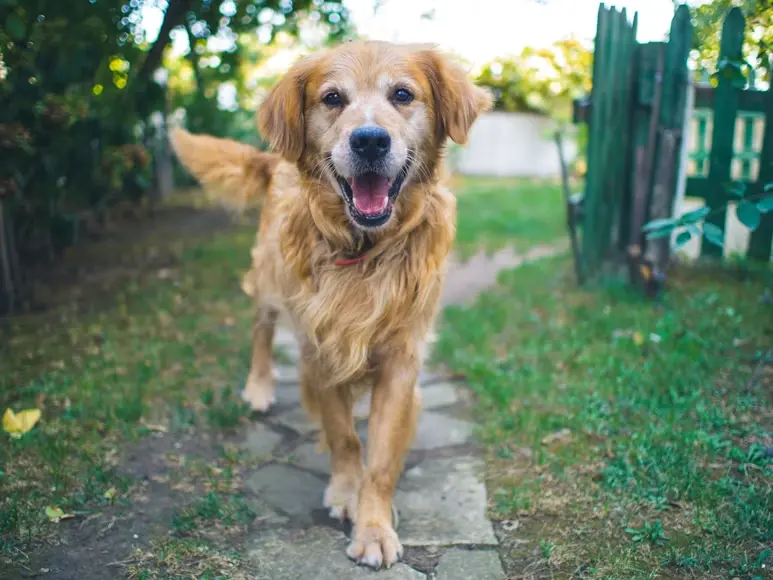
Dr. Waleed explains exactly how much exercise senior dogs need, what to stop doing, and how to read your dog's response. Based on AAHA 2023 Senior Care Guidelines and veterinary rehabilitation evidence.
This is one of the questions I hear most often from owners of senior dogs, and it almost always comes from a place of genuine worry — not laziness. They have noticed their dog slowing down. They are concerned about causing pain. They have read somewhere that exercise is good for arthritis, and also somewhere else that rest is important, and they are not sure which is true.
Both are partially true. The full answer is more nuanced than either — and getting it right makes a bigger difference to a senior dog's quality of life than almost any other daily decision an owner makes.
This post covers what the evidence actually says about exercise in senior dogs, what to stop doing, what to start doing, and how to read your own dog as the most reliable guide of all.
First: Why Exercise Matters More as Dogs Age, Not Less
The most common mistake I see is the well-intentioned decision to rest an aging or arthritic dog. The owner sees stiffness and slowing down, concludes that movement is causing harm, and reduces exercise significantly. This feels like care. Clinically, it often makes things worse.
Here is why. Sarcopenia — the age-related loss of muscle mass and strength — typically begins as early as 7 years of age in larger breeds and slightly later in smaller breeds. According to veterinary muscle health research, muscle loss leads to reduced mobility, increased risk of injury, joint problems, and metabolic disorders that compound the challenges of aging. Critically, the loss of muscle mass around a joint directly reduces that joint's stability — meaning an arthritic dog with poor muscle mass experiences more pain, not less, than the same dog with maintained muscle conditioning.
Exercise does not wear joints out in senior dogs. Appropriate exercise maintains the muscle mass that protects those joints. Complete rest does the opposite.
Beyond joints and muscles, regular movement improves circulation — bringing nutrients to tissues and removing waste products. It supports weight management, which is one of the single most impactful factors in arthritic pain. It maintains cardiovascular function. And according to the 2023 AAHA Senior Care Guidelines, it supports cognitive health — physical activity is one of the components of environmental enrichment that helps slow cognitive decline in senior dogs.
The goal with a senior dog is not to find reasons to reduce exercise. It is to find the right kind and the right amount.
What Changes With Age
Senior dogs cannot do what they did at three years old. That is not a failure — it is physiology. Understanding what changes helps you calibrate correctly rather than either overdoing it or shutting down exercise altogether.
Recovery time increases. A younger dog can take a long run and show no ill effects the next morning. A senior dog doing the same will often be significantly stiffer the following day. This does not mean they cannot exercise — it means the volume and intensity need adjusting, and recovery needs to be factored in.
Thermoregulation becomes less efficient. Older dogs overheat and overcool more easily than young dogs. Exercise in heat carries greater risk, and cold weather significantly worsens joint stiffness — making a five-minute warm-up walk before more active movement important.
Cardiovascular reserve decreases. The heart and lungs become less efficient at supporting sustained high-intensity activity. This is another reason why moderate consistent exercise is preferable to occasional intense activity.
Pain tolerance and compensation increase. Senior dogs become very skilled at compensating for pain — shifting weight, adjusting gait, avoiding certain movements — often without any obvious limping. This means you cannot use absence of limping as a sign that exercise intensity is appropriate. You have to watch more carefully, and we will cover exactly what to watch for.
The Framework: Short, Frequent, Consistent
If there is one principle that applies to almost every senior dog regardless of breed, size, or specific condition, it is this: short, frequent, consistent exercise is significantly better than infrequent long sessions.
Two twenty-minute walks per day produces better outcomes than one forty-minute walk. Three fifteen-minute sessions is better still for dogs with significant arthritis. The reasons are physiological — peak joint loading is lower during shorter sessions, recovery begins sooner, and the consistency of daily movement prevents the stiffness that accumulates during prolonged rest periods. A dog that is inactive for 18 hours and then walks for an hour is doing far worse than a dog that moves gently three times across the same 18 hours.
Consistency also matters enormously across the week. Weekend warrior exercise patterns — sedentary during the week and then a long walk on Saturday — are one of the most common causes of post-exercise stiffness and soreness I see in senior dogs. The musculoskeletal system of an aging dog needs daily movement to stay functional. Irregular high-volume exercise on an otherwise sedentary body is hard on any system, and harder still on an aging one.
Walk Type and Terrain
Not all walking is equivalent for a senior dog. The surface, gradient, and pace all matter.
Flat, even surfaces are ideal — pavements, grass paths, smooth trails. Uneven terrain, cobblestones, and loose gravel require constant micro-corrections in balance and foot placement that tire senior dogs faster and stress joints asymmetrically. This does not mean your dog can never walk on uneven ground, but it should not be the default.
Hills deserve specific attention. Going uphill is actually less problematic than going downhill for most arthritic dogs — downhill walking loads the front limbs heavily and significantly increases joint impact. If your usual route involves a steep descent, consider turning back before it rather than completing the loop.
Leash walks are better than off-lead runs for most senior dogs with joint disease. Off-lead movement tends to involve sudden accelerations, direction changes, and social interactions that can spike joint loading unpredictably. A calm, consistent leash walk allows you to control pace and surface and observe your dog's gait in real time.
Pace should be your dog's choice, not yours. Let your senior dog set the pace on walks rather than pulling them along at yours. A dog that is slowing is telling you something. A dog that wants to sniff and meander — apparently "wasting time" from a cardiovascular standpoint — is using that time for mental stimulation that has genuine cognitive health value.
Swimming and Hydrotherapy
For dogs with moderate to severe arthritis or significant muscle loss, hydrotherapy is arguably the gold standard exercise modality. The buoyancy of water reduces weight-bearing stress on joints while providing gentle resistance that builds and maintains muscle. An underwater treadmill allows for controlled exercise intensity, making it ideal for gradual reconditioning. Even straightforward swimming in appropriate settings maintains range of motion and builds core strength with minimal joint discomfort.
Veterinary rehabilitation specialists specifically recommend hydrotherapy for senior dogs with joint disease because it achieves the muscle-building goal of exercise while eliminating the joint-loading cost. If you have access to a veterinary rehabilitation centre with hydrotherapy, it is worth a referral discussion with your vet — particularly for large breeds with hip dysplasia, dogs recovering from orthopaedic procedures, or any dog whose arthritis has progressed to the point where conventional walking is visibly uncomfortable.
Exercise That Should Stop Entirely
There are specific types of movement that carry meaningful risk in senior dogs and that I recommend stopping or significantly restricting.
Jumping — on and off furniture, in and out of cars, over obstacles — creates compressive joint forces that far exceed what walking produces. A senior dog with arthritis landing from a jump generates a joint load equivalent to multiple times their body weight. Replace jumping with ramps or steps for any regular access point. This single change makes a measurable difference to daily joint comfort.
Fetch with sudden direction changes is one of the most joint-damaging activities for senior dogs and one of the hardest for owners to give up, because dogs often still want to play fetch enthusiastically. Enthusiasm does not equal physical readiness. The combination of high-speed running, sudden stops, and twisting to pick up a ball puts extraordinary stress on joints and soft tissue. Gentle, low-speed retrieval of a toy rolled slowly across a flat surface is a reasonable alternative that maintains the mental engagement without the physical cost.
Sustained high-intensity running — running alongside a bicycle, extended jogging, or vigorous play sessions — should be assessed carefully. For a healthy senior dog with no joint disease and good muscle condition, some of this may still be appropriate at a reduced level. For a dog with diagnosed arthritis, it is not.
Exercise in high heat — anything above approximately 25°C (77°F) — carries genuine risk for senior dogs. Their thermoregulation is less efficient, they fatigue faster, and heatstroke risk increases meaningfully. Move walks to early morning or evening during warm weather.
How to Read Your Dog After Exercise
This is the most practically important section of this post because no written guide can substitute for direct observation of your specific dog. Here is the assessment framework I give to owners.
The next-morning stiffness test. Observe your dog within the first ten minutes of getting up the morning after any new or increased exercise session. Normal: they move with roughly the same ease as before the exercise change. Concerning: noticeably more stiffness than usual, reluctance to rise, limping that was not present before, or a pause before moving that is longer than usual. If you see any of these, you exercised too much — scale back and rebuild more gradually.
During-exercise signals. Watch for lagging behind, slowing significantly, holding up a paw during or after the walk, shaking out a limb, or simply stopping and refusing to continue. These are direct communication — the dog is telling you they have reached their limit. Respond to them rather than trying to push through.
Post-exercise behaviour. A senior dog that has exercised appropriately will rest comfortably afterward — settled, relaxed, sleeping normally. A dog that is restless, cannot find a comfortable position, repeatedly changes position, licks at joints, or seems agitated after exercise is in more discomfort than the exercise justified.
The 24-hour rule. Make any exercise change — in duration, intensity, or type — and hold it for at least 24 hours before assessing response. Some muscle soreness manifests the following day rather than immediately. The next-morning stiffness test is your most reliable data point.
When to Get a Referral to a Rehabilitation Specialist
Veterinary rehabilitation is a genuine clinical specialty with certified practitioners — not a luxury service. For senior dogs with significant mobility limitations, a referral to a certified canine rehabilitation practitioner provides something a general vet consultation cannot: an individualised, structured exercise programme designed for your specific dog's specific limitations, delivered by someone who assesses gait, muscle mass, range of motion, and pain response in detail.
If your dog has moderate to severe arthritis, has had orthopaedic surgery, has significant muscle wasting, or has neurological signs affecting movement, a rehabilitation referral is worth raising with your vet. The outcomes from structured rehabilitation programmes are substantially better than improvised home exercise in these cases, and the difference in quality of life over a 6-12 month period is significant.
A Practical Starting Point for Most Senior Dogs
If you are uncertain where to begin, here is a conservative starting framework for a senior dog with mild to moderate arthritis and no other major concurrent conditions. Adjust based on your dog's response.
Two walks per day of 15-20 minutes each on flat, even surfaces at your dog's preferred pace. Morning and evening, avoiding the hottest part of the day. On-lead for control and gait observation. No jumping, no fetch, no sudden high-intensity activity. Five minutes of gentle movement before each walk — simply walking slowly around the garden — as a warm-up. Apply the next-morning stiffness test after each week of this routine before considering any increase.
Build from this base only when the stiffness test consistently shows no deterioration. If your dog tolerates this well for two to three weeks, you can add five minutes to each session or introduce a third short session. If you see increased stiffness, scale back rather than pushing through it.
Frequently Asked Questions
How much exercise does a senior dog need per day?
Most senior dogs benefit from 20 to 40 minutes of gentle exercise per day, split into two shorter sessions rather than one long walk. The exact amount depends on your dog's breed, size, and health condition. Large breeds and dogs with arthritis need shorter, gentler sessions. Small breeds often maintain more energy into old age. Let your dog's comfort and recovery guide you — if they are stiff the next day, reduce duration.
Is it bad to over-exercise an old dog?
Yes, over-exercising a senior dog can cause significant harm — worsening arthritis pain, causing muscle injuries, and leading to exhaustion that takes days to recover from. Signs you have overdone it include excessive panting after returning home, reluctance to move the following day, increased limping, and stiffness that is worse than usual. Always err on the side of less exercise and build up gradually.
What type of exercise is best for senior dogs?
Gentle leash walks on flat, soft surfaces are ideal for most senior dogs. Swimming and hydrotherapy are excellent low-impact options that strengthen muscles without stressing joints. Short, slow sniff walks — where your dog sets the pace and stops to smell — are mentally stimulating and physically gentle. Avoid fetch, running, rough play, and any exercise involving jumping or sudden direction changes.
My old dog doesn't want to walk anymore — is that normal?
Reluctance to walk in a senior dog is not something to dismiss as simply getting old. It is often a sign of pain — most commonly arthritis — or fatigue from an underlying condition like heart disease or anaemia. If your dog was previously happy to walk and now resists, refuses, or stops frequently during walks, schedule a vet appointment to identify the cause before continuing the exercise routine.
Can swimming help a dog with arthritis?
Swimming is one of the best exercises for arthritic dogs. The buoyancy of water supports body weight and removes stress from painful joints while still allowing full range of motion and muscle strengthening. Hydrotherapy — swimming in a controlled therapeutic pool supervised by a trained professional — is increasingly available and produces measurable improvements in mobility and pain levels in arthritic dogs.
Should I exercise my senior dog even on bad pain days?
On days when your dog is clearly in more pain than usual — limping badly, very stiff, reluctant to move — rest is appropriate. Forcing exercise on a high-pain day causes more harm than benefit. However complete rest for extended periods is also harmful, as muscles weaken and joints stiffen further. On bad days, a very short, slow toilet walk is sufficient. Resume normal gentle exercise when your dog shows improvement.
A Note From Dr. Waleed
Exercise for a senior dog is not a decision you make once and leave unchanged. It is something you calibrate continuously based on what your dog is telling you — week by week, season by season, as their condition evolves. The owners who do this well are not the ones who found the perfect exercise routine. They are the ones who learned to read their dog and stayed willing to adjust.
The most important thing I want you to take from this post is that appropriate movement is medicine for an aging dog. Not aggressive exercise, not enforced rest — the right amount of the right kind of movement, done consistently, with attention to how your dog responds. That is one of the most powerful things you can do for their quality of life in their senior years.
Have a question about your senior dog's exercise or mobility? Ask Dr. Waleed →
Also read: How to Help a Dog With Arthritis at Home: A Vet's Complete Guide and Signs of Arthritis in Senior Dogs: What Most Owners Miss
🩹 Veterinary Disclaimer
This article is written by Dr. Waleed, DVM for general educational purposes only. It does not constitute a veterinary consultation or diagnosis for your specific pet. Always consult a veterinarian before making health decisions for your dog. If your pet is in distress, contact your vet or emergency animal clinic immediately.
Frequently Asked Questions
How much exercise does a senior dog need per day?
Should I stop walking my dog if they have arthritis?
Is swimming good for senior dogs?
What exercise should senior dogs avoid?
How do I know if I have exercised my senior dog too much?
What is the best type of walk for a senior dog?
How much exercise does a senior dog need per day?
Is it bad to over-exercise an old dog?
What type of exercise is best for senior dogs?
My old dog doesn't want to walk anymore — is that normal?
Can swimming help a dog with arthritis?
Should I exercise my senior dog even on bad pain days?
Dr. Waleed, DVM
Veterinarian · Grey Muzzle Squad
A veterinarian with a deep focus on companion animal health. Founded this blog to give pet owners access to real, clinical veterinary knowledge ??? without the guesswork.
Read full bio →Comments
Loading comments...
Leave a Comment
More to Read
View All
Why Is My Dog Stiff After Lying Down? Here's What It Really Means
Your dog looks stiff for the first few steps after resting, then walks fine? A vet explains exactly what this pattern means and when to worry

Why Is My Dog Pacing at Night? Dementia, Anxiety & Other Causes
Is your senior dog pacing, panting or confused at night? Learn about canine dementia, anxiety and restlessness.

Why Is My Dog So Itchy? Causes, Treatment & When to See a Vet
Why Is My Old Dog So Itchy All of a Sudden?

Why Is My Dog Drinking So Much Water? Causes & When to Worry
Is your senior dog suddenly drinking a lot of water? A vet explains kidney disease, diabetes, Cushing's and every other cause

Why Is My Dog Breathing Fast While Resting? Causes & What to Do
Is your dog breathing fast while resting? Learn the possible causes, how to check your dog's breathing rate and when it's an emergency.

Dog Arthritis Injections: Every Option Explained and Which Is Safest
Confused about dog arthritis injections? Dr. Waleed explains every option — Librela, Adequan, steroids, PRP — what each one does, which is safest, and how to choose.