
When to Consider Euthanasia for a Dog With Arthritis

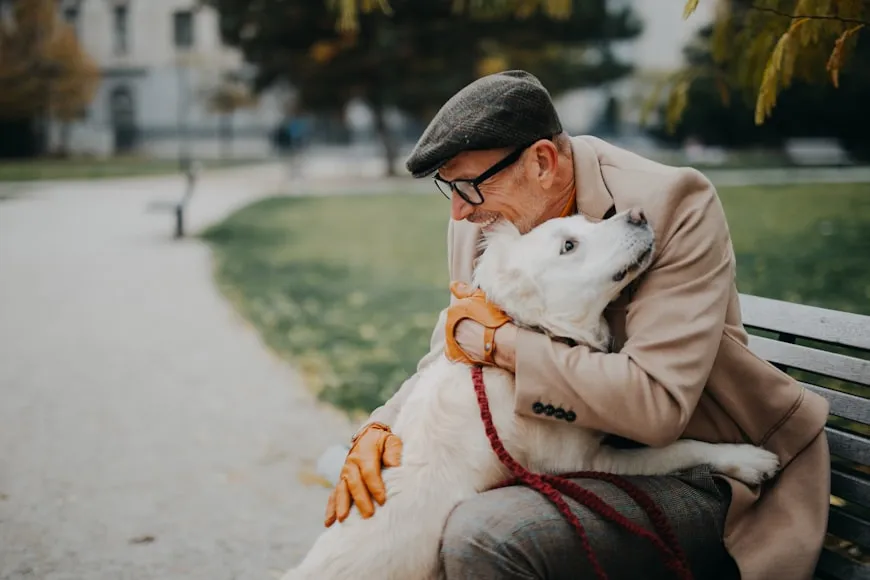
Veterinarian Dr. Waleed explains how to know when arthritis pain is no longer manageable in senior dogs, including the HHHHHMM quality of life scale and what euthanasia actually involves.
If you are reading this, you are probably sitting with one of the hardest questions a dog owner ever faces. Your dog — the one who has been by your side for years — is struggling. And somewhere in the back of your mind, a question is forming that you almost do not want to say out loud.
When is it time to let go?
As a veterinarian, I want you to know something first: the fact that you are asking this question is not a sign of giving up. It is a sign of love. It takes enormous courage to put your dog's comfort above your own grief.
In this guide, I will walk you through the signs that arthritis has progressed beyond what pain management can control, how vets actually assess quality of life, and how to make this decision with clarity instead of guilt.
Why Arthritis Becomes a Quality of Life Issue
Arthritis in senior dogs is not just stiffness. In its advanced stages, canine osteoarthritis causes chronic, unrelenting pain that affects every part of a dog's daily life — how they sleep, eat, move, and interact with the people they love.
Pain medication, joint supplements, physiotherapy, and mobility aids can do a tremendous amount. But there comes a point in some dogs where no combination of treatments is enough to restore a life worth living. That is the point where euthanasia becomes, in the truest sense, an act of mercy.
Signs That Arthritis Pain Is No Longer Manageable
These are the clinical signs I look for when a dog's arthritis has crossed into a territory where quality of life is seriously compromised:
1. Pain That Does Not Respond to Medication
If your dog is on NSAIDs, gabapentin, or other pain medications and is still crying out, panting at rest, or unable to find a comfortable position, the pain is winning. Maximum medical therapy should be in place before this conclusion is drawn — but when it is, it matters enormously.
2. Complete Loss of Mobility
A dog who cannot stand without assistance, cannot walk to their water bowl, or cannot go outside to relieve themselves without falling is experiencing a profound loss of dignity alongside their pain. Mobility is not just physical — it is tied to a dog's mental wellbeing and sense of self.
3. Refusing Food and Water
When a dog stops eating — even favorite treats — and stops drinking, their body is often telling us something that words cannot. This is especially significant when it persists for more than 24 to 48 hours.
4. Loss of Interest in Life
Dogs are expressive creatures. When a dog who used to wag at your footsteps now barely lifts their head, when they stop responding to the people and things they loved — that emotional withdrawal is one of the most telling signs of all.
5. Inability to Maintain Basic Hygiene
Dogs who cannot move enough to keep themselves clean, who are developing pressure sores from lying in one position, or who are soiling themselves without awareness are experiencing suffering that goes beyond pain alone.
6. More Bad Days Than Good Days
This is perhaps the simplest measure. Keep a simple daily diary. Mark each day as good, neutral, or bad. When bad days consistently outnumber good ones over a two-week period, quality of life has tipped.
The HHHHHMM Quality of Life Scale
The most widely used clinical tool for making this assessment is the HHHHHMM Quality of Life Scale, developed by Dr. Alice Villalobos, a veterinary oncologist who pioneered end-of-life care for pets.
Each letter stands for a category you score from 1 to 10, where 10 is ideal and 1 is the worst:
H — Hurt
Is your dog's pain being adequately controlled? Can they breathe comfortably? Pain management is the first and most important category. A dog living in unmanaged pain scores very low here regardless of everything else.
H — Hunger
Is your dog eating enough to maintain body weight? Even with assistance or hand feeding? A dog who has stopped eating entirely for multiple days scores critically low.
H — Hydration
Is your dog drinking enough water? Dehydration adds significant suffering on top of existing pain. Check by gently lifting the skin at the back of the neck — if it does not spring back quickly, your dog may be dehydrated.
H — Hygiene
Can your dog be kept clean and free from sores? Is their coat being maintained? A dog with untreatable pressure wounds or who cannot be kept clean without extreme distress scores low here.
H — Happiness
Does your dog still show interest in life? Do they respond to you, seek affection, show moments of enjoyment? Even small moments of happiness — a tail wag, interest in a toy — matter in this score.
M — Mobility
Can your dog move enough to satisfy their basic needs — to go outside, change position, interact with the family? Mobility aids like slings, carts, or ramps can help maintain a reasonable score here for some dogs.
M — More Good Days Than Bad
Looking at the overall picture, are good days outnumbering bad ones? This is the summary measure that ties everything together.
How to score: Add all seven scores together. A total above 35 suggests acceptable quality of life. A total consistently below 35 — especially when scores in Hurt, Happiness, and Mobility are all low — is a strong signal that it may be time.
You do not have to do this alone. Print this scale and fill it out with your veterinarian. Having an objective number in front of you can bring remarkable clarity to what feels like an impossible decision.
What Euthanasia Actually Is
The word comes from the Greek: eu (good) and thanatos (death). A good death. That is exactly what veterinary euthanasia is when performed correctly.
Your dog will receive a sedative first in most practices, so they are completely relaxed and unaware. Then a concentrated anaesthetic agent is given intravenously. Your dog will lose consciousness within seconds — peacefully, painlessly, and in your arms if you choose to be present. There is no fear, no struggle, no pain.
For a dog who has been suffering, this is a gift. One of the last and greatest acts of love you can give them.
The Guilt You Are Feeling Is Normal
Almost every owner I have spoken with after making this decision has used one phrase: "I just didn't want to do it too soon."
That fear — of acting too early — is what causes many dogs to suffer longer than they need to. Veterinarians understand this. We have seen it hundreds of times. And almost universally, when owners look back, the thought is not "I did it too soon." It is "I wish I had done it a little sooner."
You are not ending their life. You are ending their suffering. There is a difference, and it matters.
Talking to Your Veterinarian
If you are unsure, please make an appointment specifically to discuss quality of life — not a regular checkup, but a dedicated conversation. Tell your vet you want to talk about where your dog is and what the future looks like. A good veterinarian will never rush this decision, but they will give you honest guidance.
You can also ask about in-home euthanasia, which is now available in many cities. Allowing your dog to pass away in their favourite spot — on their own bed, surrounded by the smells of home — is something many owners find deeply comforting for both themselves and their dog.
After Your Dog Is Gone
Grief after losing a dog is real and it is valid. Do not let anyone minimise what you are feeling. The bond between a dog and their owner is one of the most unconditional relationships that exists. Losing that deserves to be mourned.
Give yourself time. Talk to people who understand — there are pet loss support groups, online communities, and in some areas, counsellors who specialise in pet bereavement.
And when you are ready — not before — remember that the love you gave your dog shaped every good day they had. That does not end when they do.
Frequently Asked Questions
How do I know if my dog is suffering from arthritis pain?
Signs of unmanaged arthritis pain include crying or whimpering at rest, panting without any heat or exercise, reluctance to move, loss of appetite, and withdrawing from the family. If your dog has stopped greeting you at the door, no longer wants to be touched, or spends most of their day lying still and looking uncomfortable — that is suffering, not just old age. Talk to your vet about whether their pain management plan needs to be reviewed.
What is the HHHHHMM scale and how do I use it?
The HHHHHMM scale is a quality of life tool developed by Dr. Alice Villalobos. It scores seven categories — Hurt, Hunger, Hydration, Hygiene, Happiness, Mobility, and More Good Days Than Bad — each from 1 to 10. A total score above 35 suggests acceptable quality of life. A score consistently below 35, especially when Hurt, Happiness, and Mobility are all low, is a strong signal that it may be time to have an honest conversation with your vet.
Is it too soon to consider euthanasia if my dog is still eating?
Eating alone does not mean a dog is not suffering. Some dogs eat out of habit or drive even when in significant pain. Look at the whole picture — are there more bad days than good ones? Is your dog still interested in life, able to move, comfortable at rest? Appetite is just one of seven quality of life measures. Do not use it as the only indicator when making this decision.
Should I be present during euthanasia?
This is entirely your personal decision and there is absolutely no wrong answer. Many owners find that being present brings comfort to both themselves and their dog — your voice and smell are the most familiar things in the world to them. Others find it too difficult and that is completely valid too. Discuss your options with your vet beforehand so you can decide calmly, without pressure in the moment.
How long does veterinary euthanasia take?
The procedure itself is very peaceful and quick — typically just a few minutes. Most vets give a sedative first so your dog is completely relaxed and drowsy before anything else happens. Then the final injection is given and your dog loses consciousness within seconds, painlessly. There is no fear, no struggle, no distress. For a dog who has been suffering, it is genuinely a gentle and peaceful end.
How do I cope with grief after losing my dog to euthanasia?
The grief of losing a dog is real, deep, and completely valid — do not let anyone minimise what you are feeling. The bond between a dog and their owner is one of the most unconditional relationships that exists. Give yourself time to grieve properly. Pet loss support groups, online communities, and counsellors who specialise in pet bereavement can all help. And when you are ready — not before — remember that every good day your dog had was shaped by the love you gave them.
Final Words from Dr. Waleed
I wrote this post because I have sat across from dog owners facing this decision, and I have seen the weight of it. There is no perfect moment. There is no answer that takes away the pain of loss. But there is a way to make this decision from love rather than guilt, from clarity rather than confusion.
Use the HHHHHMM scale. Talk to your vet. Trust what you see in your dog every day — because you know them better than anyone.
You have been a good owner. This last act of care is proof of that.
Have a Question for Dr. Waleed?
This is one of the hardest topics in senior dog care, and every situation is different. If you have a specific question about your dog's quality of life or are unsure what to do next, send it to me directly via the Ask Dr. Waleed page. I read every message personally.
🩹 Veterinary Disclaimer
This article is written by Dr. Waleed, DVM for general educational purposes only. It does not constitute a veterinary consultation or diagnosis for your specific pet. Always consult a veterinarian before making health decisions for your dog. If your pet is in distress, contact your vet or emergency animal clinic immediately.
Frequently Asked Questions
How do I know if my dog is suffering from arthritis pain?
What is the HHHHHMM scale and how do I use it?
Is it too soon to consider euthanasia if my dog is still eating?
Should I be present during euthanasia?
How long does veterinary euthanasia take?
How do I cope with grief after losing my dog to euthanasia?
Dr. Waleed, DVM
Veterinarian · Grey Muzzle Squad
A veterinarian with a deep focus on companion animal health. Founded this blog to give pet owners access to real, clinical veterinary knowledge ??? without the guesswork.
Read full bio →Comments
Loading comments...
Leave a Comment
More to Read
View All
Why Is My Dog Stiff After Lying Down? Here's What It Really Means
Your dog looks stiff for the first few steps after resting, then walks fine? A vet explains exactly what this pattern means and when to worry

Why Is My Dog Pacing at Night? Dementia, Anxiety & Other Causes
Is your senior dog pacing, panting or confused at night? Learn about canine dementia, anxiety and restlessness.

Why Is My Dog So Itchy? Causes, Treatment & When to See a Vet
Why Is My Old Dog So Itchy All of a Sudden?

Why Is My Dog Drinking So Much Water? Causes & When to Worry
Is your senior dog suddenly drinking a lot of water? A vet explains kidney disease, diabetes, Cushing's and every other cause
Why Is My Dog Breathing Fast While Resting? Causes & What to Do
Is your dog breathing fast while resting? Learn the possible causes, how to check your dog's breathing rate and when it's an emergency.
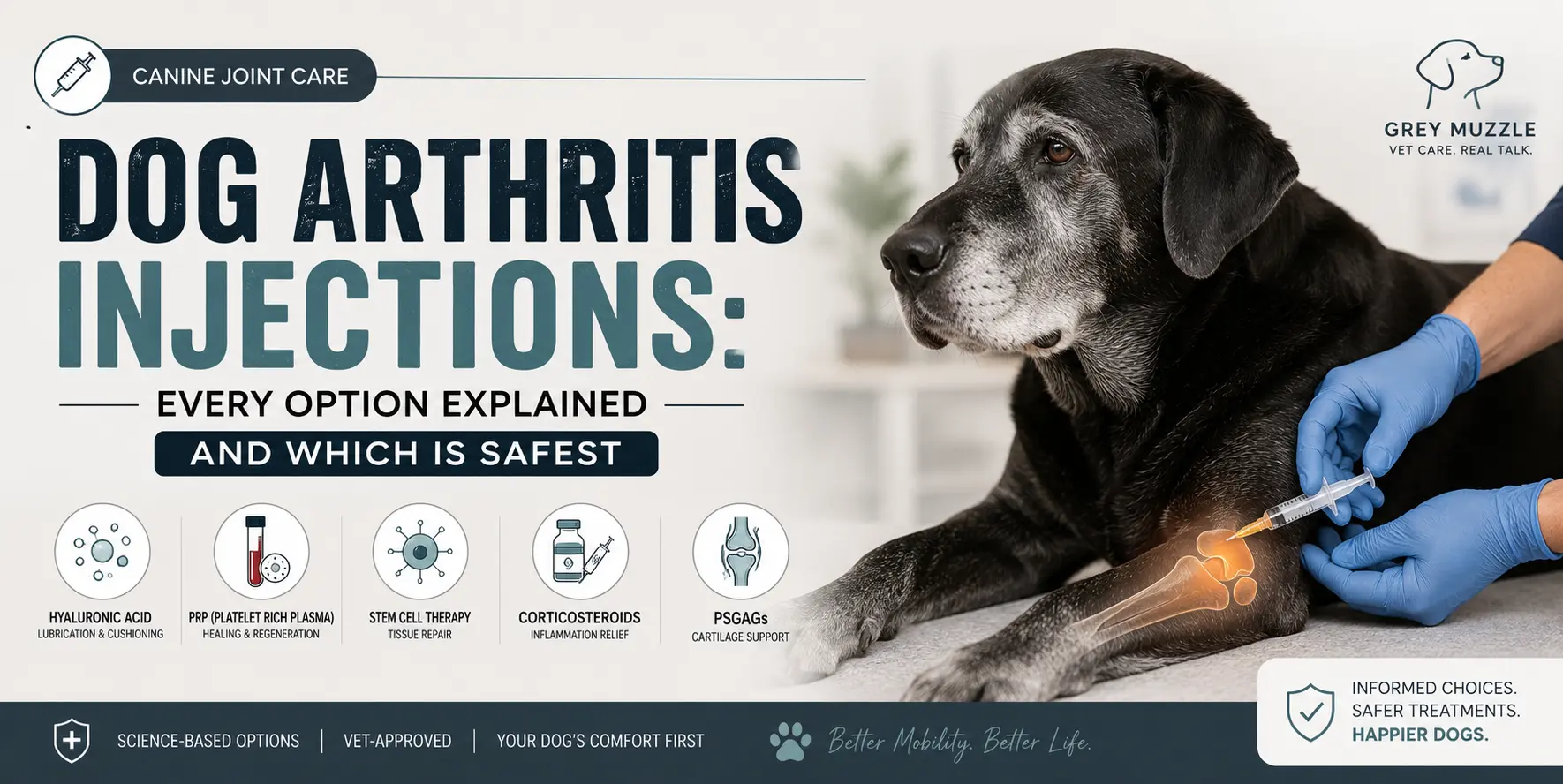
Dog Arthritis Injections: Every Option Explained and Which Is Safest
Confused about dog arthritis injections? Dr. Waleed explains every option — Librela, Adequan, steroids, PRP — what each one does, which is safest, and how to choose.