
Why Is My Dog Drinking So Much Water? Causes & When to Worry

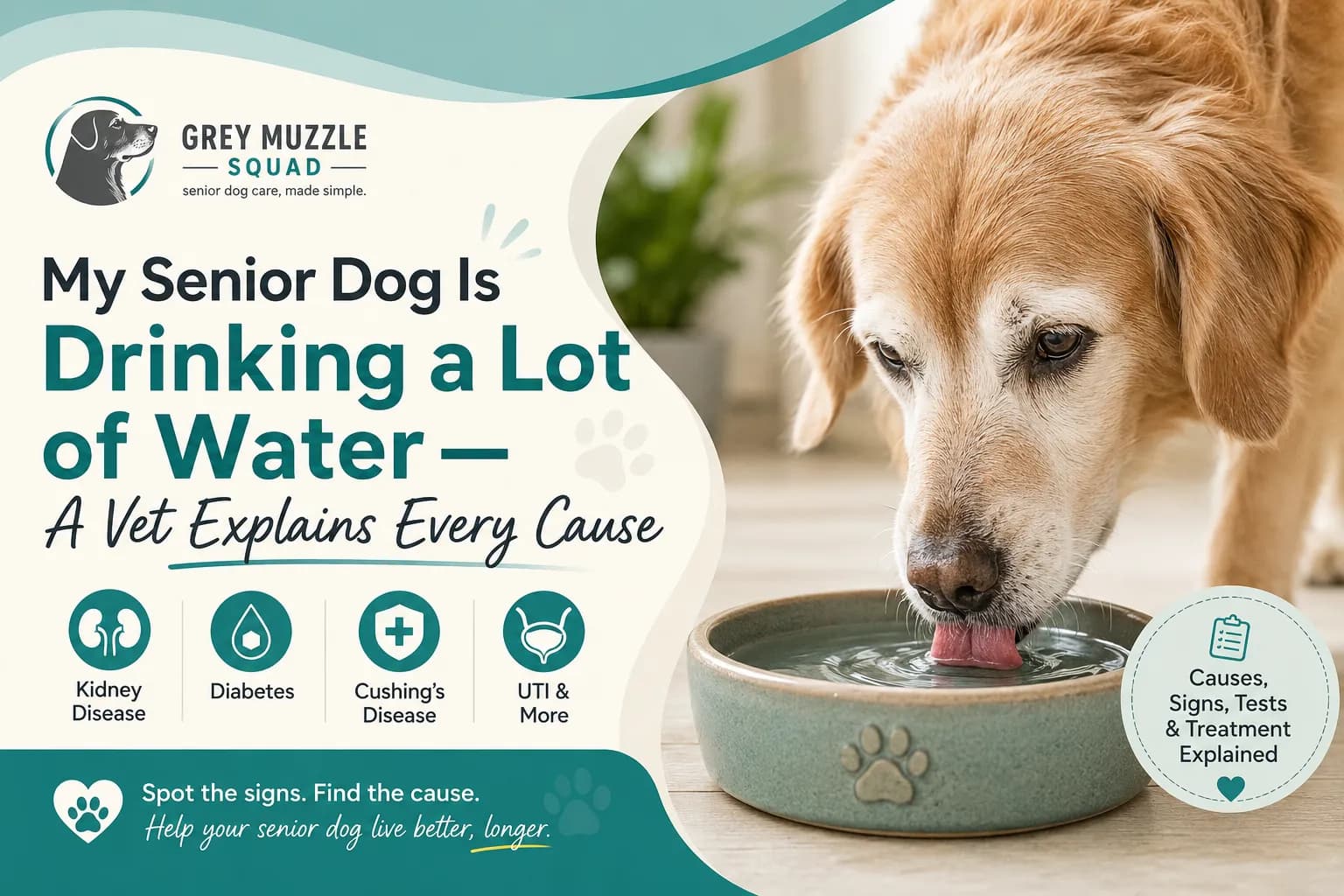
Is your senior dog suddenly drinking a lot of water? A vet explains kidney disease, diabetes, Cushing's and every other cause
It's the third time tonight you've heard the tags jingle against the water bowl. You lie there listening to your old dog lapping away in the dark kitchen, and a quiet worry starts to form. She's always liked her water, but not like this. Not enough to wake up and drink at 2am, not enough to empty the bowl twice in one evening. Maybe you've even started wondering if she's had an accident on the kitchen floor to go along with it.
If you're reading this at that exact moment — half-asleep, phone lit up, typing "why is my senior dog drinking so much water" into Google — I want you to know two things. First, you were right to notice. A senior dog's drinking habits are one of the most honest signals their body gives you, and a real shift in thirst is never something to shrug off as "just getting older." Second, most of the conditions behind this are things we can diagnose with a simple blood panel and urine test, and many of them are very manageable once we know what we're dealing with.
This guide walks you through exactly what excessive thirst in a senior dog can mean, why older dogs are more prone to it, which causes are common versus rare, when this becomes a true emergency, and what happens at the vet when you bring this up. By the end, you'll know whether tonight is a "call in the morning" situation or one that needs attention sooner.
What Counts as "Drinking Too Much" in a Senior Dog?
Before anything else, it helps to know the actual numbers, because "he seems thirstier" is subjective and vets need something more concrete to work with.
A healthy dog typically drinks somewhere around 50-60ml of water per kilogram of body weight per day — roughly a cup of water for every 10 pounds. Vets start to use the term polydipsia (excessive thirst) once intake climbs above about 100ml per kilogram per day. For a 20kg (44lb) senior dog, that's the difference between drinking around 1 liter a day normally, and drinking 2 liters or more when something is off.
You don't need to measure this with a graduated cylinder to take it seriously. The pattern owners usually notice first is behavioral: refilling the bowl more often than you used to, your dog lingering at the water dish, waking at night to drink, or drinking a whole bowl in one sitting instead of sipping through the day. If that's paired with more frequent urination, accidents in the house, or a dog asking to go outside more at night, that combination — excessive thirst plus excessive urination — is the classic pattern vets call polyuria/polydipsia (PU/PD), and it's the single biggest reason to book a vet visit rather than wait it out.
Why Senior Dogs Are More Prone to This
Thirst regulation in a dog's body depends on a tight loop between the kidneys, the pituitary gland, and hormones like antidiuretic hormone (ADH). Over a dog's lifetime, several of the organs in that loop are simply more likely to develop wear-and-tear disease — the kidneys lose functioning tissue gradually with age, the adrenal glands can develop small hormone-secreting tumors, and the pancreas can lose its ability to produce insulin efficiently. None of this is really about age itself causing thirst; it's that the diseases which cause excessive thirst become dramatically more common once a dog crosses into their senior years, generally from around 7 years old onward depending on breed and size.
This is also why a sudden change is so much more meaningful in an 11-year-old dog than it would be in a 2-year-old. In a young, healthy dog, going through a thirstier week is far more likely to be weather, activity, or diet. In a senior dog, it's the body's way of surfacing a problem that's been developing quietly for a while.
The Main Causes — And the Clue That Points to Each
There isn't one single reason senior dogs drink excessively — there are over a dozen possible causes, but the vast majority of real-world cases come down to a handful of conditions. Here's what we're actually looking for.
1. Chronic Kidney Disease (CKD)
This is the most common cause of increased thirst in older dogs. As kidney tissue gradually loses function, the kidneys lose their ability to concentrate urine, so the body loses more water than it should through urination — and your dog compensates by drinking more to keep up.
The clue: Increased thirst paired with pale, very dilute-looking urine, some weight loss, a duller coat, and occasional vomiting or reduced appetite. Bad breath with an ammonia-like edge can also show up in more advanced cases.
2. Diabetes Mellitus
When the body can't properly regulate blood sugar, excess glucose spills into the urine and pulls large amounts of water out with it, triggering both frequent urination and intense thirst.
The clue: Increased thirst alongside a ravenous appetite that doesn't lead to weight gain — often the opposite, with gradual weight loss despite eating well. Urine may attract ants outside or feel slightly sticky.
3. Cushing's Disease (Hyperadrenocorticism)
This condition develops when the adrenal glands produce too much cortisol, often due to a small pituitary tumor. Excess cortisol interferes with the hormone that helps the kidneys conserve water, so thirst and urination both climb.
The clue: A pot-bellied appearance, thinning skin, hair loss along the trunk without itching, muscle wasting in the legs, and panting more than usual — often alongside the thirst.
4. Liver Disease
The liver plays a role in processing waste products and regulating several of the hormones involved in fluid balance. As liver function declines, thirst can increase as one of several subtle signs.
The clue: Thirst combined with a yellowish tinge to the gums or whites of the eyes (jaundice), reduced appetite, and occasional confusion or disorientation.
5. Urinary Tract Infection or Pyometra
Infections in the bladder or kidneys can trigger increased thirst as the body tries to flush bacteria and compensate for fluid loss. In unspayed female dogs, a uterine infection (pyometra) is a serious cause that can present this way.
The clue: Straining to urinate, blood-tinged urine, frequent small urinations, or — in unspayed females — vaginal discharge and a swollen abdomen. Pyometra is a true emergency.
6. Medication Side Effects
Several common medications increase thirst as a known side effect, most notably corticosteroids (like prednisone), phenobarbital for seizure control, and diuretics such as furosemide used for heart conditions.
The clue: The thirst started shortly after beginning a new medication or a dose increase. This is worth mentioning to your vet rather than adjusting the medication yourself.
7. Hypercalcemia
Elevated calcium in the blood — sometimes linked to certain cancers, particularly lymphoma — interferes with the kidneys' ability to concentrate urine.
The clue: Thirst alongside lethargy, reduced appetite, and sometimes a palpable lump or swollen lymph nodes. This one is less common but important to rule out, especially in breeds prone to lymphoma.
8. Psychogenic Polydipsia and Diabetes Insipidus (Rare)
True behavioral over-drinking and diabetes insipidus (a rare hormonal condition unrelated to blood sugar) both exist, but they are genuinely uncommon and are diagnosed only after every other cause above has been ruled out.
The clue: None specific — these are diagnoses of exclusion, meaning your vet will only land here after bloodwork and urinalysis come back otherwise unremarkable.
Emergency Signs — Go Now vs. Call in the Morning
Go to an emergency vet now if you see:
Excessive thirst combined with repeated vomiting or an inability to keep water down
A swollen, tense, or painful abdomen (especially in an unspayed female — possible pyometra)
Collapse, extreme lethargy, or unresponsiveness
Straining to urinate with little or no urine coming out
Rapid, labored breathing alongside the thirst
Call your vet in the morning or book a routine visit if:
Your dog is drinking noticeably more than usual but is otherwise eating, playing, and acting like themselves
The increase has been gradual over several weeks rather than sudden
There's no vomiting, no abdominal swelling, and urination — while more frequent — is otherwise normal
How a Vet Investigates Increased Thirst
The good news about this particular symptom is that the workup is fairly standard and doesn't usually require guesswork. A typical visit looks like this:
History and physical exam — your vet will ask exactly how much your dog is drinking, over what timeframe, and whether it's paired with urination changes, appetite changes, or weight loss.
Urinalysis — checking urine specific gravity (how concentrated it is), glucose, protein, and signs of infection. This alone rules in or out a huge portion of the possible causes.
Blood chemistry panel and complete blood count — evaluating kidney values, liver enzymes, blood glucose, and calcium levels.
Further testing if needed — if the first round doesn't pinpoint a cause, your vet may recommend an ACTH stimulation test for Cushing's disease, abdominal ultrasound, or blood pressure measurement.
Most cases are identified within this first round of bloodwork and urine testing — it's genuinely one of the more diagnosable symptoms in senior dog medicine.
Treatment Options
Treatment depends entirely on the underlying cause, which is exactly why the diagnostic workup above matters so much:
Chronic kidney disease — managed with a kidney-support prescription diet, phosphorus binders, and sometimes subcutaneous fluids at home. Not curable, but very manageable for years in many dogs.
Diabetes mellitus — managed with daily insulin injections and a consistent feeding schedule. Most diabetic dogs do very well once regulated.
Cushing's disease — managed with daily oral medication (commonly trilostane) and regular monitoring bloodwork.
UTI or pyometra — UTIs are treated with antibiotics; pyometra requires emergency surgery.
Medication-related thirst — your vet may adjust the dose or switch medications if the benefit-risk balance allows it.
What You Can Do at Home
Never restrict your dog's water access to try to "fix" the thirst — this can be dangerous and doesn't address the underlying cause.
Keep a simple written log of roughly how much they're drinking and how often they're asking to go out, so you have real information to bring to the vet.
Note any other changes — appetite, energy, weight, coat — even if they seem unrelated.
Make nighttime bathroom access easier if urination has increased, to reduce accidents and stress for both of you.
A Final Word From Dr. Waleed
Increased thirst is one of those symptoms that feels small in the moment — it's just a dog drinking water, after all — but it's often the very first thing a body says before anything else becomes obvious. I've seen this exact sign catch chronic kidney disease and Cushing's disease early enough to make a real difference in how the following years went for both the dog and the family. You noticing the water bowl emptying faster than usual is exactly the kind of attentiveness that catches these things early. Trust that instinct, get the bloodwork done, and know that most of what's behind this is manageable once we can see it clearly.
Frequently Asked Questions
How much water is too much for a senior dog?
As a general guide, more than 100ml per kilogram of body weight per day (roughly double the normal amount) is considered excessive and worth a vet visit — but any noticeable, sustained increase in a senior dog is worth mentioning even before you've measured anything precisely.
Why is my old dog drinking a lot of water and peeing in the house?
This combination — increased thirst plus increased or accidental urination — is one of the clearest signals of an underlying medical cause like kidney disease, diabetes, or Cushing's disease, and should be checked by a vet rather than treated as a house-training issue.
Can dehydration cause a senior dog to drink more water?
Yes, but dehydration from heat, exercise, or illness usually resolves within a day once your dog rehydrates. If the increased thirst continues day after day, it points toward an underlying condition rather than simple dehydration.
Is it normal for older dogs to drink more water as they age?
No — age itself doesn't cause increased thirst. What increases with age is the likelihood of developing conditions like kidney disease and Cushing's disease, which do cause it. A real increase in thirst should always be checked rather than dismissed as normal aging.
What blood tests diagnose the cause of excessive thirst in dogs?
A standard blood chemistry panel, complete blood count, and urinalysis identify the vast majority of causes, including kidney disease, diabetes, and liver disease. Cushing's disease usually requires an additional ACTH stimulation test to confirm.
Should I limit my dog's water if they're drinking too much?
No. Restricting water access does not address the underlying cause and can be genuinely dangerous, especially if the cause turns out to be kidney disease or diabetes. Always let your dog drink freely and address the cause through your vet instead.
Can medication cause my senior dog to drink more water?
Yes. Corticosteroids like prednisone, seizure medications like phenobarbital, and diuretics like furosemide are all known to increase thirst as a side effect. Mention any current medications to your vet when discussing this symptom.
Is excessive thirst in dogs a sign of cancer?
It can be, though it's less common than kidney disease or diabetes. Certain cancers, particularly lymphoma, can raise blood calcium levels in a way that increases thirst. This is one of the reasons a full workup is worth doing rather than assuming the most common cause.
Have a question about your own senior dog? Ask Dr. Waleed directly — every question helps shape the next guide on this blog.
Related reading:
Kidney Disease in Senior Dogs: What Every Owner Needs to Know
Diabetes in Senior Dogs: Signs, Treatment and What Life Really Looks Like
🩹 Veterinary Disclaimer
This article is written by Dr. Waleed, DVM for general educational purposes only. It does not constitute a veterinary consultation or diagnosis for your specific pet. Always consult a veterinarian before making health decisions for your dog. If your pet is in distress, contact your vet or emergency animal clinic immediately.
Frequently Asked Questions
How much water is too much for a senior dog?
Why is my old dog drinking a lot of water and peeing in the house?
Can dehydration cause a senior dog to drink more water?
Is it normal for older dogs to drink more water as they age?
What blood tests diagnose the cause of excessive thirst in dogs?
Should I limit my dog's water if they're drinking too much?
Can medication cause my senior dog to drink more water?
Is excessive thirst in dogs a sign of cancer?
Dr. Waleed, DVM
Veterinarian · Grey Muzzle Squad
A veterinarian with a deep focus on companion animal health. Founded this blog to give pet owners access to real, clinical veterinary knowledge ??? without the guesswork.
Read full bio →Comments
Loading comments...
Leave a Comment
More to Read
View All
Why Is My Dog Stiff After Lying Down? Here's What It Really Means
Your dog looks stiff for the first few steps after resting, then walks fine? A vet explains exactly what this pattern means and when to worry

Why Is My Dog Pacing at Night? Dementia, Anxiety & Other Causes
Is your senior dog pacing, panting or confused at night? Learn about canine dementia, anxiety and restlessness.

Why Is My Dog So Itchy? Causes, Treatment & When to See a Vet
Why Is My Old Dog So Itchy All of a Sudden?
Why Is My Dog Breathing Fast While Resting? Causes & What to Do
Is your dog breathing fast while resting? Learn the possible causes, how to check your dog's breathing rate and when it's an emergency.
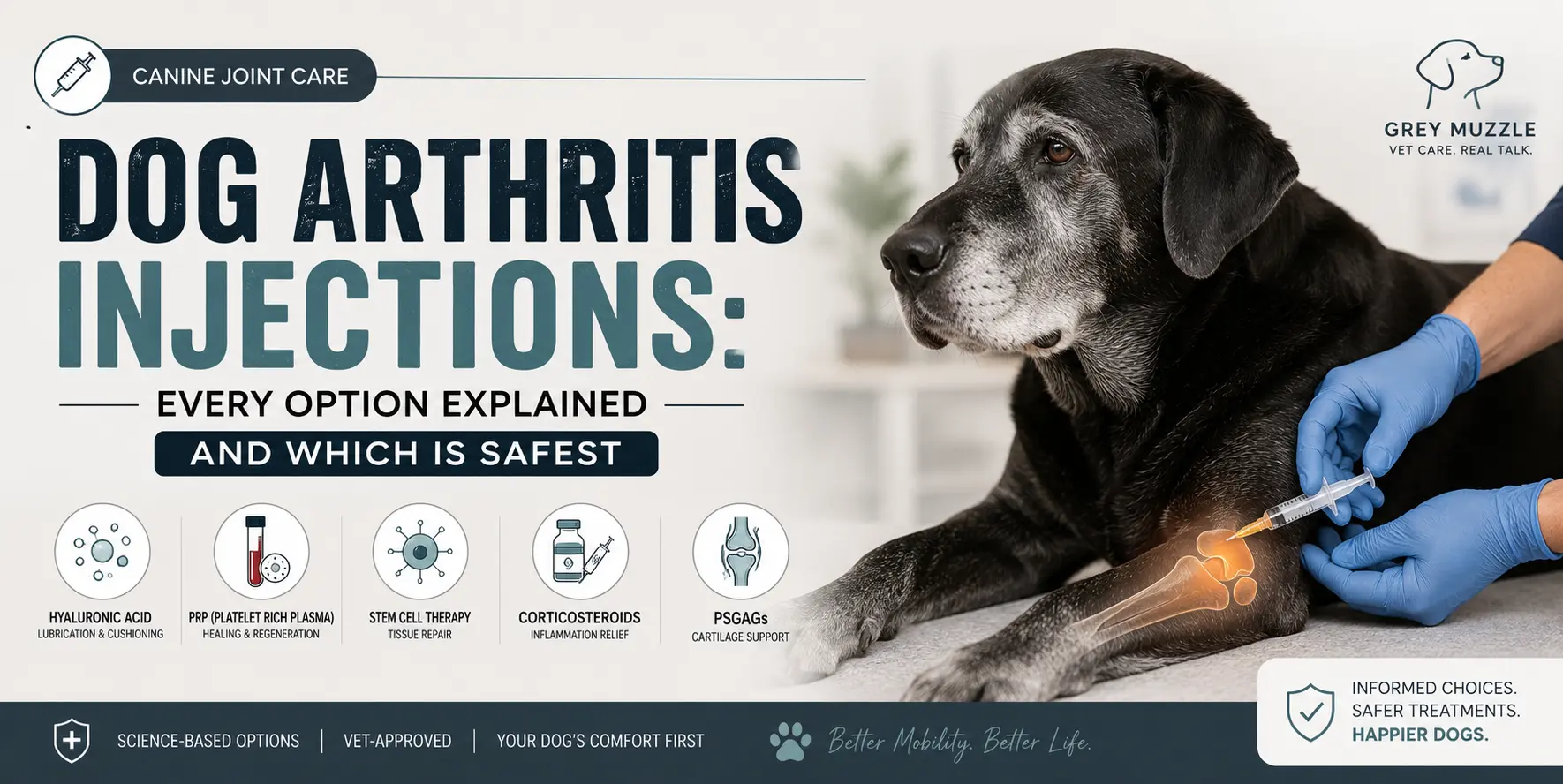
Dog Arthritis Injections: Every Option Explained and Which Is Safest
Confused about dog arthritis injections? Dr. Waleed explains every option — Librela, Adequan, steroids, PRP — what each one does, which is safest, and how to choose.
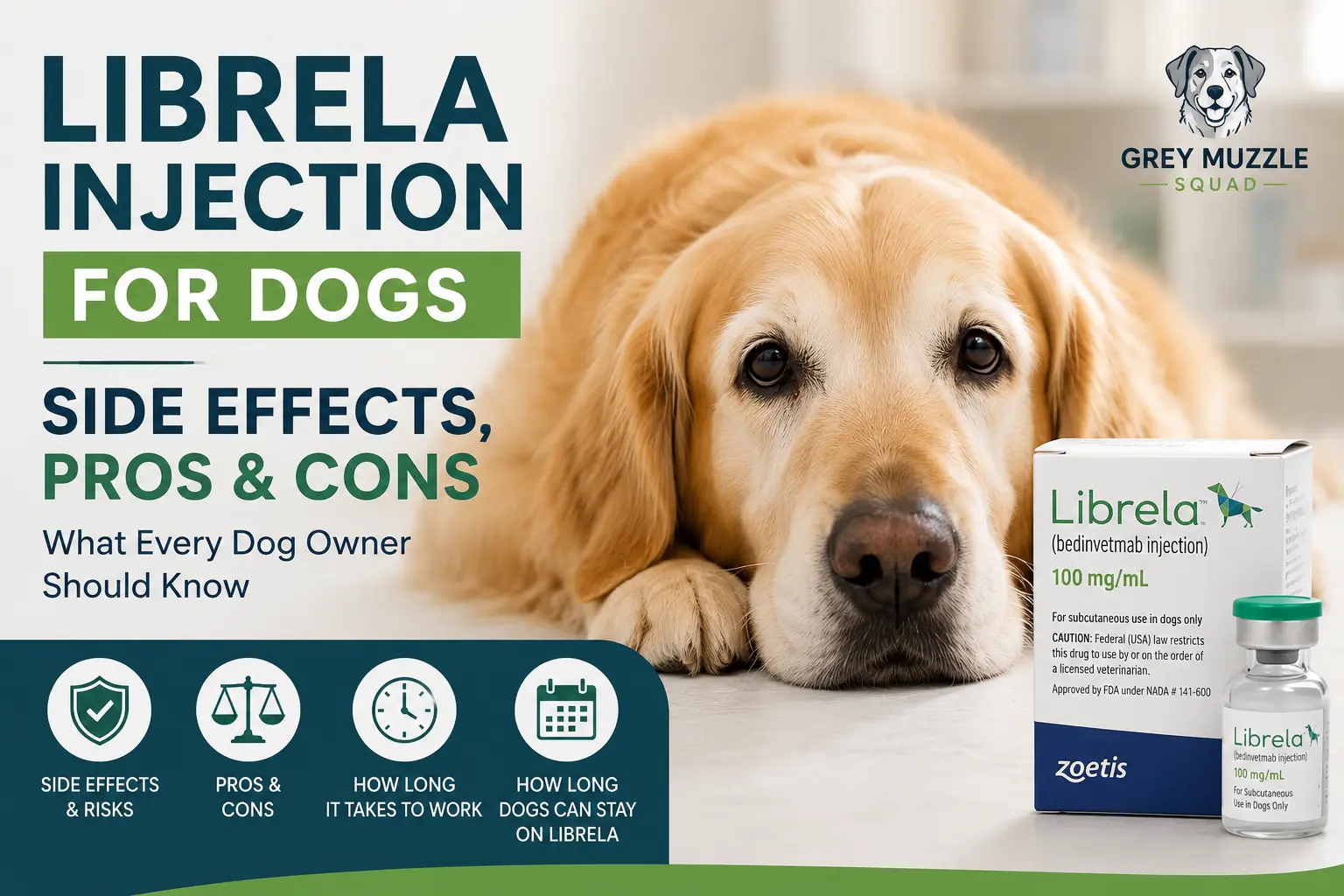
Librela injection for dogs: side effects, how long it takes, pros and cons
Is Librela safe for your dog? Dr. Waleed covers side effects, how long it takes to work, pros and cons, and what the FDA data actually shows.