
Signs of Cognitive Decline in Senior Dogs: What Owners Miss and What Actually Helps


Dr. Waleed explains canine cognitive dysfunction — the dog equivalent of Alzheimer's — using the DISHAA framework from AAHA guidelines. Signs, diagnosis, and what actually works.
Your dog stood in the corner of the kitchen last night, facing the wall, for ten minutes. Or they barked at nothing at 2am when they have slept silently for years. Or they walked past their food bowl — the one they have eaten from every day for a decade — and then looked at you confused, as if they had forgotten it existed.
You told yourself it was nothing. A bad night. Getting older.
But something sat with you. Something felt different. And you were right to notice it.
What you may be seeing are the early signs of Canine Cognitive Dysfunction Syndrome — the condition that is, in almost every meaningful way, the dog equivalent of Alzheimer's disease. It is far more common than most owners realise, far more treatable than most owners know, and almost universally dismissed as "just old age" until it has progressed well past the point where early intervention would have made the biggest difference.
This post is about catching it early. Because according to the 2023 AAHA Senior Care Guidelines, early treatment is significantly more effective than late treatment — and right now, the gap between how often dogs have this condition and how often it gets properly diagnosed and treated is one of the most striking failures in senior dog care.
What Is Canine Cognitive Dysfunction Syndrome?
Canine Cognitive Dysfunction Syndrome (CDS or CCDS) is a progressive neurodegenerative disease caused by age-related changes in the brain. In dogs with CDS, a substance called beta-amyloid protein accumulates in the brain — the same type of abnormal protein deposit seen in human Alzheimer's disease. Alongside this, there is reduced blood flow to the brain, loss of neurons, and cerebral atrophy — the gradual shrinking of brain tissue over time.
These are not subtle changes. They are structural, measurable, and progressive. And they produce real, observable behavioural changes in your dog that are distinct from normal aging — even though they are almost always dismissed as exactly that.
The scale of underdiagnosis is striking. Research cited in Today's Veterinary Practice shows that 75% of dogs aged 7 and older had at least one behavioural change indicative of CDS — but only 12% of their owners had mentioned it to their veterinarian. A separate study estimated the prevalence of canine CDS at 14.2%, but the veterinary diagnosis rate was just 1.9%. The condition is extremely common. The diagnosis is extremely rare. That gap exists almost entirely because owners — and sometimes vets — attribute early signs to normal aging rather than to a diagnosable, treatable condition.
The DISHAA Framework: What to Watch For
Veterinary professionals use an acronym called DISHAA to organise the clinical signs of cognitive dysfunction. It was developed by Dr. Gary Landsberg and is referenced in the 2023 AAHA Senior Care Guidelines as a standard screening framework. Each letter represents a category of behaviour change. A dog with early CDS may show signs in one or two categories. Dogs with moderate or advanced disease typically show signs across most of them.
D — Disorientation
This is often the first sign owners notice and the one they find most unsettling. Your dog appears confused in familiar spaces — standing in the middle of a room looking lost, going to the wrong side of a door and waiting to be let out from the hinge side rather than the handle side, getting stuck in corners and being unable to navigate out of them, failing to recognise familiar people or other animals in the household.
This is not your dog being forgetful. It is their brain's spatial mapping and recognition functions deteriorating in a measurable, progressive way. A dog that has lived in the same house for twelve years and suddenly cannot find the door is not having a bad day — they are showing you something important.
I — Altered Social Interactions
Dogs with CDS frequently become withdrawn and less responsive to the people they love. A dog that used to greet you at the door may stop doing so. A dog that used to seek out physical contact — lying at your feet, leaning against you — may stop seeking it or may seem indifferent when you initiate it. Some dogs go in the opposite direction and become unusually clingy or anxious when separated from their owner, even briefly.
Reduced greeting behaviour is one of the most commonly reported early signs of CDS and one of the most emotionally difficult for owners to process — because it can feel like rejection rather than illness. It is not. It is neurological.
S — Sleep-Wake Cycle Changes
According to the 2023 AAHA Senior Care Guidelines, daytime sleeping and nighttime restlessness is one of the most common clinical presentations of CDS. The pattern is fairly consistent: the dog sleeps heavily through the day, then becomes wakeful, restless, or vocally distressed at night — pacing, whining, or barking at nothing, sometimes for hours.
This reversal of the normal sleep cycle is caused by disruption to circadian rhythm regulation in the aging brain. It is not behavioural disobedience or attention seeking. It is one of the most disruptive symptoms of CDS both for the dog, who is genuinely distressed and disoriented in the dark, and for the family.
H — Loss of House Training and Learned Behaviours
A dog that has been reliably house-trained for years begins having accidents indoors. Not occasionally — regularly, and in places they would previously never have considered. They may urinate or defecate in the middle of the room, near their own bed, or in spaces they actively avoided before.
This is one of the most commonly misattributed signs of CDS. Owners assume it is a urinary tract infection, a dietary issue, or — frustratingly — a behavioural problem. In an older dog with other signs of cognitive change, it is much more likely to reflect the loss of learned inhibitory behaviour that comes with progressive brain degeneration. The dog is not choosing to soil indoors. They have lost the neurological pathway that previously prevented it.
A — Altered Activity Levels
This can go in either direction. Some dogs become significantly less active — less interested in play, less responsive to walks, seemingly unmotivated by things that previously excited them. Others develop repetitive, purposeless behaviours: circling the same path around the garden repeatedly, pacing back and forth in the same corridor, licking the same surface compulsively without apparent reason.
Both presentations — reduced activity and repetitive purposeless movement — are neurological in origin. The brain's ability to initiate purposeful behaviour and inhibit purposeless behaviour is declining.
A — Anxiety
Anxiety is one of the most significant and most overlooked components of CDS, and the 2023 AAHA Senior Care Guidelines specifically note that it warrants direct treatment in its own right rather than being dismissed as a personality trait. Dogs with CDS often develop generalised anxiety, separation anxiety, noise sensitivity, and fear responses to previously neutral stimuli — all driven by the progressive loss of cognitive stability and the disorientation that comes with it.
A dog that becomes suddenly anxious in their senior years — fearful of thunderstorms they previously ignored, distressed when you leave the room, unsettled in familiar environments — may be demonstrating the anxiety component of CDS rather than a new behavioural quirk.
How Is CDS Diagnosed?
CDS is diagnosed by exclusion — meaning your vet must first rule out other conditions that can cause similar behavioural signs before confirming a CDS diagnosis. This is critically important. Many of the signs above can also be caused by pain, hypothyroidism, brain tumours, hypertension, hearing loss, or vision impairment — all of which require different treatment. You cannot assume CDS without a proper veterinary evaluation.
The diagnostic workup typically includes a full physical examination, neurological examination, blood panel and urinalysis to rule out metabolic causes, blood pressure measurement, and in some cases MRI to confirm cerebral atrophy and exclude other brain pathology. Your vet may also ask you to complete a structured questionnaire based on the DISHAA categories — your observations at home are genuinely diagnostic data that a vet appointment alone cannot capture.
The most important thing you can do before your appointment is keep notes. Write down specifically what you have observed — which behaviours, when they started, how frequently they occur, whether they are getting worse. Bring that record to your vet. It will meaningfully improve the quality of the assessment.
What Can Actually Be Done?
This is the part most owners do not know — and it is the most important part of this post. CDS cannot be cured or reversed. But it can be meaningfully slowed, and its symptoms can be significantly improved, particularly when treatment begins early.
Selegiline (Anipryl): This is the only FDA-approved medication for canine cognitive dysfunction. It works as a monoamine oxidase B inhibitor — blocking the enzyme that breaks down dopamine in the brain, allowing dopamine to remain active longer and improving cognitive processing, awareness, and behavioural function. In the largest clinical study to date involving 641 dogs, 77.2% showed overall improvement within 60 days of starting selegiline. The 2023 AAHA Senior Care Guidelines confirm effectiveness in up to 70% of treated dogs. It requires a veterinary prescription, and a complete medication review is essential before starting — selegiline has serious interactions with several commonly prescribed medications including fluoxetine, tramadol, and trazodone.
Diet: Diets enriched with medium-chain triglycerides (MCTs) provide an alternative energy source for the brain, which in CDS becomes less able to use glucose efficiently. In a Purina-funded double-blind clinical trial using an MCT-enriched diet, 88% of enrolled dogs either improved or did not progress over the 90-day study period, with statistically significant improvement across all six DISHAA categories. Hill's Prescription Diet b/d (brain diet) and Purina Pro Plan Bright Mind are the two most researched commercial options. Both require discussion with your vet given that senior dogs often have concurrent conditions affecting dietary needs.
Environmental enrichment: Mental stimulation genuinely matters for brain health in aging dogs. Short, regular training sessions using simple commands the dog already knows, puzzle feeders, new scent-based experiences, and gentle social interaction all support cognitive function. The goal is not to challenge the dog beyond their current capacity but to keep the brain engaged consistently. The 2023 AAHA Senior Care Guidelines specifically include environmental enrichment as a recommended component of CDS management alongside medication and diet.
Supplements: SAMe (S-adenosyl-methionine), phosphatidylserine, and omega-3 fatty acids have modest evidence bases for cognitive support in dogs. None are as well evidenced as selegiline or MCT-enriched diets, but they are generally safe when used under veterinary guidance. Products like Senilife (which combines phosphatidylserine with antioxidants and Ginkgo biloba) are the most commonly recommended in this category. Discuss with your vet before adding any supplement, particularly given potential interactions with existing medications.
Managing nighttime disturbance: The sleep-wake reversal in CDS can be one of the most distressing symptoms for both dog and family. Practical measures that help include keeping a nightlight on in the dog's sleeping area (disorientation is significantly worse in darkness), maintaining consistent bedtimes and waking times, and ensuring the sleeping space is safe and familiar. If nighttime anxiety and vocalisation are severe, your vet may recommend anti-anxiety medication as a short-term adjunct to the primary treatment plan.
What This Is Not
CDS is not your dog "going senile" in a way that is inevitable and untreatable. It is not your dog being difficult or attention-seeking. It is not something you have caused or could have prevented.
It is a progressive neurological disease with a known pathology, a validated diagnostic framework, an FDA-approved treatment, and a growing evidence base for supportive interventions. Dogs that receive early, appropriate treatment have meaningfully better quality of life and slower disease progression than dogs whose signs are dismissed as normal aging.
The owners who get the best outcomes for their dogs with CDS are the ones who trusted their instinct when something felt different — and acted on it.
Frequently Asked Questions
What does dog dementia look like?
Dog dementia — clinically called Canine Cognitive Dysfunction — looks like confusion, disorientation, and personality changes in an older dog. You might notice your dog staring blankly at walls, getting stuck in corners, forgetting commands they have known for years, failing to recognise familiar people, or becoming anxious and restless especially at night. It closely resembles Alzheimer's disease in humans.
Why is my old dog staring at the wall?
Staring at walls or into space is one of the most recognised signs of canine cognitive dysfunction. It reflects a form of disorientation where the dog seems mentally absent or confused about their surroundings. While it can occasionally indicate a seizure disorder or vision problem, persistent wall-staring in a senior dog most commonly points to cognitive decline and should be evaluated by a vet.
Why does my senior dog pace at night and not sleep?
Nighttime restlessness and pacing in senior dogs is a classic symptom of canine cognitive dysfunction, sometimes called doggy sundowner syndrome. It mirrors the evening confusion seen in human dementia patients. Disrupted sleep-wake cycles caused by changes in the brain lead to wakefulness and anxiety at night. Your vet may recommend melatonin, a prescription medication, or environmental adjustments to help.
My old dog seems confused and disoriented — what is wrong?
Sudden confusion and disorientation in a senior dog should always be evaluated urgently by a vet to rule out a stroke, vestibular disease, or brain tumour before assuming cognitive decline. If these are ruled out, canine cognitive dysfunction is the most likely diagnosis. CCD develops gradually — sudden onset confusion is more likely to have a different cause and needs prompt attention.
Can dog dementia get better or is it always progressive?
Canine cognitive dysfunction is progressive — it does not reverse. However the speed of progression varies enormously between dogs, and management can significantly slow the decline and improve quality of life. Selegiline medication, dietary antioxidants, mental enrichment activities, consistent routine, and certain supplements like omega-3s and SAMe have evidence supporting slower progression.
How do I know if my dog has dementia or is just getting old?
Normal aging in dogs includes slowing down, sleeping more, and being slightly less playful. Dementia involves qualitative changes — your dog seeming lost in familiar places, not recognising people they know, getting trapped in corners, forgetting toilet training, or showing anxiety and confusion they never had before. If the changes feel like your dog is losing their personality or mental sharpness, discuss CCD with your vet.
A Note From Dr. Waleed
Of all the conditions I see undertreated in senior dogs, cognitive dysfunction troubles me the most — because the barrier is not the availability of treatment. The barrier is that owners are not told this is a real, diagnosable condition. They are told their dog is "just getting old." And they go home and watch their dog deteriorate without knowing that a medication exists with a 77% improvement rate, or that a diet change might meaningfully slow the progression, or that the anxious, disoriented dog standing in the corner at 2am is not suffering randomly — they are suffering from something specific that has specific responses.
If your dog is showing signs in any of the DISHAA categories, do not wait for your next routine appointment. Make one specifically to discuss cognitive dysfunction. Bring your written observations. Ask directly about selegiline and dietary options. Early treatment is more effective. That is not a marketing claim — it is what the 2023 AAHA Senior Care Guidelines explicitly state, and it is what the clinical evidence supports.
Have a question about your senior dog's behaviour or cognitive health? Ask Dr. Waleed →
Also read: Signs of Arthritis in Senior Dogs: What Most Owners Miss and How to Help a Dog With Arthritis at Home
🩹 Veterinary Disclaimer
This article is written by Dr. Waleed, DVM for general educational purposes only. It does not constitute a veterinary consultation or diagnosis for your specific pet. Always consult a veterinarian before making health decisions for your dog. If your pet is in distress, contact your vet or emergency animal clinic immediately.
Frequently Asked Questions
What age does dog dementia start?
What are the first signs of dog dementia?
Is there medication for dog dementia?
Can dog dementia be reversed?
What does DISHAA mean in dog dementia?
What foods help dogs with cognitive dysfunction?
What does dog dementia look like?
Why is my old dog staring at the wall?
Why does my senior dog pace at night and not sleep?
My old dog seems confused and disoriented — what is wrong?
Can dog dementia get better or is it always progressive?
How do I know if my dog has dementia or is just getting old?
Dr. Waleed, DVM
Veterinarian · Grey Muzzle Squad
A veterinarian with a deep focus on companion animal health. Founded this blog to give pet owners access to real, clinical veterinary knowledge ??? without the guesswork.
Read full bio →Comments
Loading comments...
Leave a Comment
More to Read
View All
Why Is My Dog Stiff After Lying Down? Here's What It Really Means
Your dog looks stiff for the first few steps after resting, then walks fine? A vet explains exactly what this pattern means and when to worry
Why Is My Dog Pacing at Night? Dementia, Anxiety & Other Causes
Is your senior dog pacing, panting or confused at night? Learn about canine dementia, anxiety and restlessness.

Why Is My Dog So Itchy? Causes, Treatment & When to See a Vet
Why Is My Old Dog So Itchy All of a Sudden?

Why Is My Dog Drinking So Much Water? Causes & When to Worry
Is your senior dog suddenly drinking a lot of water? A vet explains kidney disease, diabetes, Cushing's and every other cause
Why Is My Dog Breathing Fast While Resting? Causes & What to Do
Is your dog breathing fast while resting? Learn the possible causes, how to check your dog's breathing rate and when it's an emergency.
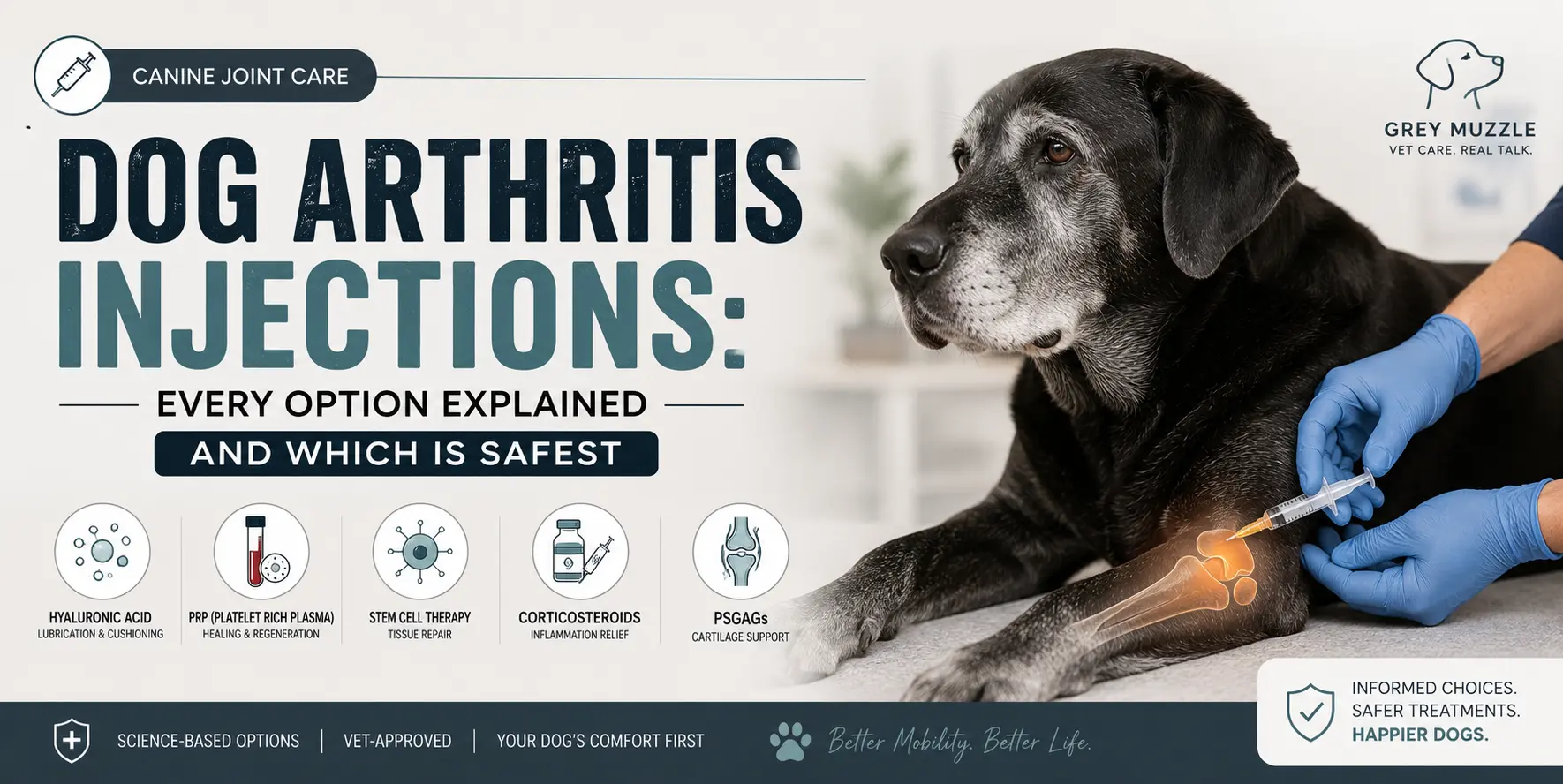
Dog Arthritis Injections: Every Option Explained and Which Is Safest
Confused about dog arthritis injections? Dr. Waleed explains every option — Librela, Adequan, steroids, PRP — what each one does, which is safest, and how to choose.